Does an EV Battery Warranty Transfer to a New Owner?
Grounded Question
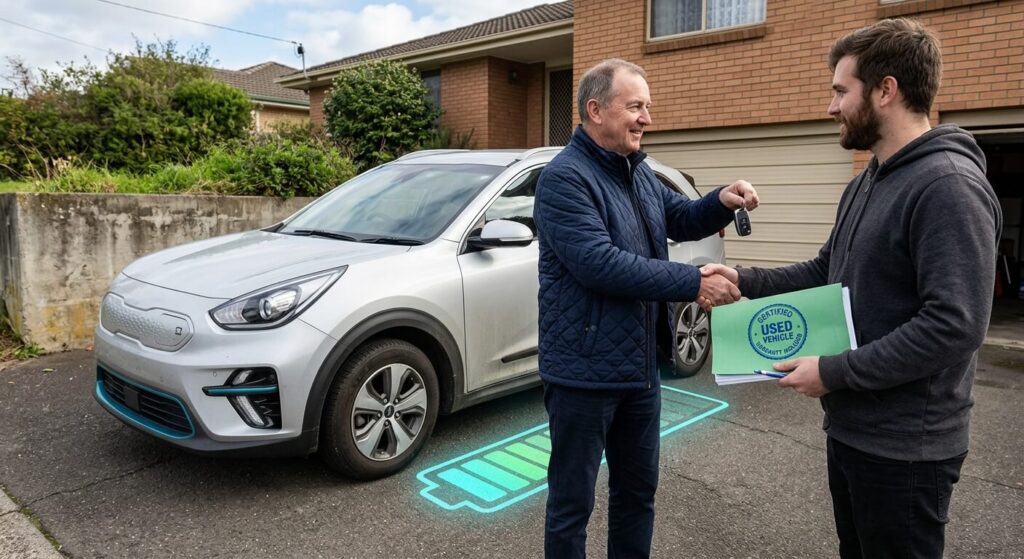
If you buy a used EV, do you get the battery warranty that came with the car or does that warranty disappear when the original owner sells it?
For most modern EVs, the battery warranty is tied to the vehicle, not the person who originally bought it.
That means a used EV can still have factory battery warranty coverage after it changes hands.
But there is an important catch:
The warranty may transfer, but the terms, remaining coverage, and transfer requirements depend on the vehicle.
So if you’re shopping for a used EV, don’t just ask whether it has a battery warranty.
Ask how much is left, what it covers, and whether anything needs to be done to verify the coverage.
At a Glance
| Question | What Used EV Buyers Should Know |
|---|---|
| Does the battery warranty usually transfer? | Yes, for many EVs |
| Is it tied to the original owner? | Usually no, coverage generally stays with the vehicle |
| Does the warranty restart after a sale? | No |
| What matters most? | Remaining time, mileage, coverage terms, and exclusions |
| Does a warranty prove the battery is healthy? | No |
| Should you verify coverage? | Absolutely |
The exact terms vary by vehicle, so the manufacturer’s warranty documentation is what ultimately matters.
Short Answer: Usually, Yes
EV battery warranties are generally designed to stay with the vehicle rather than the original owner.
So if you buy a used EV that still has battery warranty remaining, you can generally receive the benefit of that remaining coverage.
What you don’t get is a fresh warranty.
If the original battery warranty was eight years and the vehicle is already four years old, the second owner generally gets the remaining four years, subject to the applicable terms.
The same applies to mileage limits.
The warranty transfers. The clock doesn’t reset.
Why This Matters When Buying a Used EV
An EV battery is one of the vehicle’s most important components and potentially one of its most expensive to replace.
That makes remaining battery warranty coverage useful information when evaluating a used EV.
A vehicle with several years of battery coverage remaining presents a different situation from one approaching the end of its factory warranty.
The warranty doesn’t guarantee that the battery will never have a problem.
It simply provides manufacturer coverage for qualifying problems during the remaining warranty period.
How Long Does an EV Battery Warranty Last?
There isn’t one warranty period that applies to every EV.
A common U.S. baseline is 8 years or 100,000 miles, while some vehicles offer longer coverage.
When you’re looking at a used EV, check:
- Original warranty start date
- Warranty duration
- Mileage limit
- Current vehicle mileage
- Remaining coverage
Don’t assume that every EV has the same terms.
Check the warranty for the specific vehicle you’re buying.
What About Battery Degradation?
This is an important distinction.
Some EV battery warranties include a minimum capacity retention threshold. That threshold defines when battery degradation may qualify for warranty coverage.
But a warranty threshold isn’t the same thing as a prediction of how healthy the battery should be.
In other words:
A capacity threshold is a warranty floor not a target.
A battery can still be covered by warranty while having experienced some degradation.
That’s why the question:
“Is the battery still under warranty?”
is different from:
“How healthy is the battery today?”
Does a Warranty Tell You the Battery’s Health?
No.
An active warranty tells you that certain battery-related problems may be covered under the manufacturer’s terms.
It does not give you a complete picture of the battery’s current condition, remaining capacity, or real world performance.
That’s why warranty status and battery health are worth treating as two separate pieces of information.
Warranty = remaining protection.
Battery health = current condition.
For a used EV buyer, both can be useful.
Does a Used EV Need a Battery Health Check?
Not necessarily.
But if you’re seriously considering a used EV, knowing the battery’s current condition can give you information that the warranty alone doesn’t provide.
An independent battery health report may help answer questions such as:
- How is the battery performing today?
- How much capacity remains?
- Is there measurable degradation?
- Does the battery’s condition match what you’re expecting from the vehicle?
It isn’t a replacement for checking the factory warranty.
It’s simply answering a different question.
What Can Affect Battery Warranty Coverage?
Transferability doesn’t mean every battery related problem is automatically covered.
Manufacturers can have exclusions and conditions associated with their warranties.
Examples can include:
- Flood or fire damage
- Accident or physical damage
- Improper repairs or maintenance
- Unauthorized modifications
- Certain improper uses of the vehicle
- Certain charging or operational conditions
- Failure to perform required software or firmware updates
The exact exclusions vary by vehicle.
For a used EV, the vehicle’s history can therefore matter just as much as the age and mileage.
Don’t assume that being within the warranty period automatically means every battery problem is covered.
What About Salvage or Flood-Damaged EVs?
This deserves particular attention.
A used EV with a salvage history, flood damage, or significant accident history shouldn’t be evaluated simply by looking at the remaining warranty period.
If you’re considering a vehicle with unusual history, verify with the manufacturer how that history affects the specific warranty before treating the coverage as part of the vehicle’s value.
The same applies to major modifications or questionable previous repairs.
Verify the coverage on the vehicle you’re actually buying.
What Should You Verify Before Buying?
If you’re buying a used EV, you should be able to answer a few basic questions before relying on its battery warranty.
1. What’s the Original Battery Warranty?
Find out:
- Warranty duration
- Mileage limit
- Capacity guarantee, if applicable
- What components are covered
2. How Much Coverage Remains?
Check:
- Original in service date
- Current mileage
- Remaining warranty period
3. Does the Warranty Transfer?
Don’t assume.
Confirm that the warranty remains valid when ownership changes.
4. Does the VIN Still Qualify?
Verify the actual vehicle rather than relying on a general statement about the model.
5. Are There Relevant Exclusions?
Look at:
- Accident history
- Flood damage
- Salvage history
- Modifications
- Previous repairs
6. What Do You Know About the Battery’s Current Condition?
If possible, get battery health information separately from the warranty information.
What If the Seller Says “It Still Has a Battery Warranty”?
That’s useful information but don’t stop there.
Ask:
“Can we verify the remaining warranty with the manufacturer using the VIN?”
You’re not accusing the seller of anything.
You’re simply verifying an important part of the vehicle you’re considering.
A seller saying the vehicle is covered is one thing.
The manufacturer confirming the specific VIN’s coverage is much more useful.
What About Battery Replacement Costs?
The remaining warranty can matter financially because a battery problem outside warranty can potentially be an expensive repair.
Replacement costs vary substantially depending on the vehicle, battery, parts availability, labor, and the specific problem.
Some EV battery replacements can cost several thousand dollars, while others can run considerably higher.
There’s no single replacement price that applies to every EV.
The important point for a used EV buyer is simple:
Know when the factory safety net ends.
A Simple Used-EV Battery Warranty Checklist
Before buying, you should be able to answer these questions:
| Question | Verified? |
|---|---|
| What is the original battery warranty? | ☐ |
| How many years remain? | ☐ |
| How many miles remain? | ☐ |
| Does the warranty transfer? | ☐ |
| Is the VIN currently eligible? | ☐ |
| Is there a capacity-retention guarantee? | ☐ |
| What are the major exclusions? | ☐ |
| Does the vehicle have accident/flood/salvage history? | ☐ |
| Do I have any battery-health information? | ☐ |
If you can’t answer some of these questions, that doesn’t automatically mean the vehicle is a bad purchase.
It means you haven’t finished verifying what you’re buying.
Living With It
An EV battery warranty is easy to overlook when you’re buying a used car.
The vehicle drives normally.
The battery works.
The seller says it has a warranty.
Done.
But there’s a meaningful difference between:
“This EV has a battery warranty.”
and
“This specific EV has verified battery coverage remaining, and I know what that coverage includes.”
The second statement is much more useful.
You don’t need to become an expert in battery chemistry or warranty law.
You just need to verify the basics.
What Used-EV Buyers Should Remember
Yes, EV battery warranties generally transfer with the vehicle.
But the warranty doesn’t restart when the vehicle changes hands, and the exact coverage depends on the specific vehicle.
Before buying a used EV:
- Verify the original battery warranty.
- Check the remaining time and mileage.
- Confirm that the warranty transfers.
- Verify the specific VIN’s coverage.
- Review relevant exclusions and vehicle history.
- Consider getting separate battery-health information.
The biggest thing to remember is that warranty coverage and battery health aren’t the same thing.
A warranty tells you what protection may remain.
A battery health check tells you more about the condition of the battery you’re actually buying.
Grounded Take
A used EV doesn’t lose its battery warranty simply because it changes owners in most cases.
But don’t take “still under warranty” at face value.
Verify the specific vehicle’s remaining coverage, understand what the warranty actually covers, and remember that an active warranty doesn’t tell you everything about the battery’s current condition.
That’s enough to turn a vague claim about a “warrantied battery” into something you can actually use when evaluating a used EV.