A Grounded Guide to Choosing the Right Vehicle for Your Lifestyle
Grounded Question
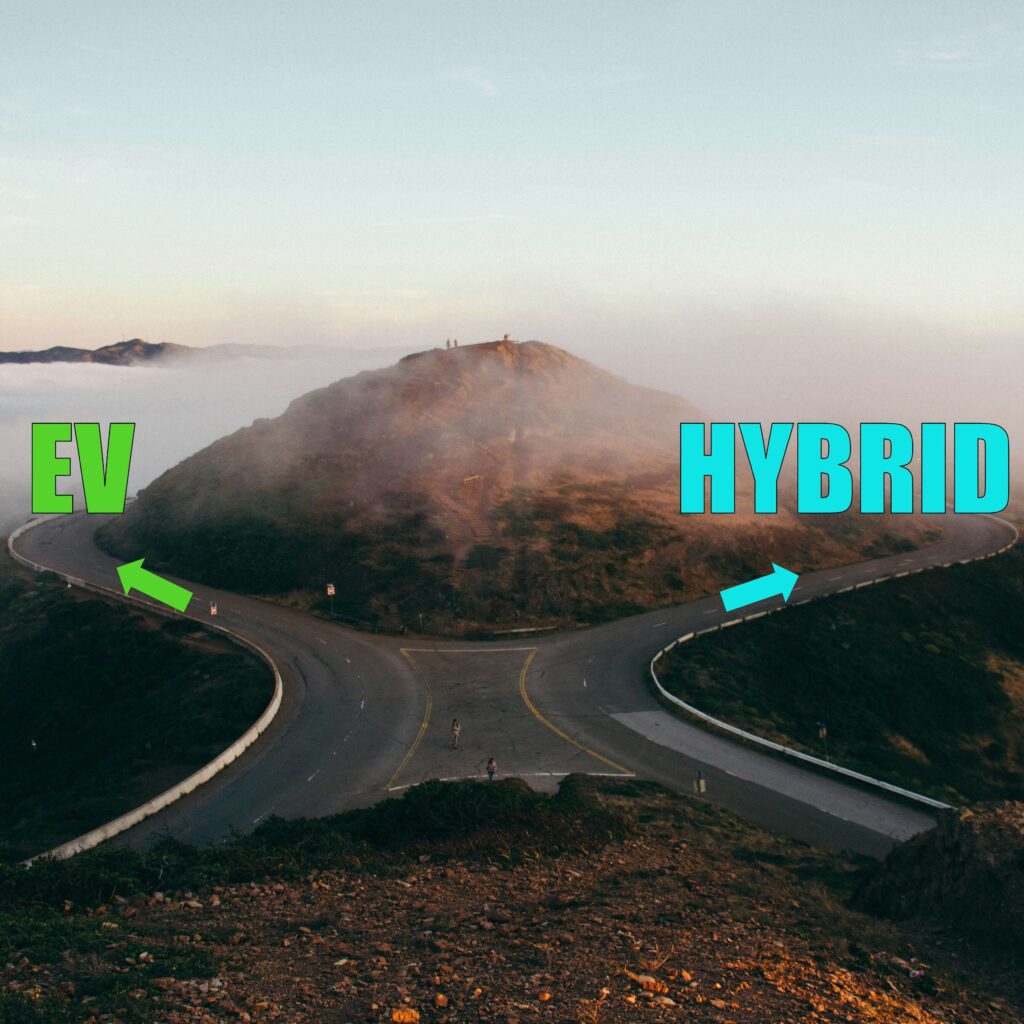
Should you buy an electric vehicle or a hybrid—and what actually matters more than fuel economy?
At a Glance
| If you… | Consider |
|---|---|
| Charge at home every night | EV |
| Live in an apartment or rely on public charging | Hybrid |
| Mostly drive locally | EV |
| Frequently take long road trips | Hybrid |
| Want the lowest maintenance | EV |
| Want maximum flexibility | Hybrid |
Short Answer
There isn’t a universal winner.
The best choice depends less on the vehicle and more on how you drive, where you park, and whether you can charge at home.
For some people, an EV offers lower running costs, less maintenance, and a quieter driving experience. For others, a hybrid provides nearly all the fuel savings without changing daily routines.
The goal isn’t choosing the newest technology—it’s choosing the technology that fits your life.
Choose an EV if you can charge at home, drive mostly local miles, and want lower maintenance. Choose a hybrid if you can’t reliably charge, take frequent road trips, or want maximum flexibility without changing your routine.
Why This Matters
The conversation around EVs often turns into a debate over which technology is “better.”
That’s the wrong question.
Both EVs and hybrids have become excellent vehicles. The difference is that they solve different problems.
If you buy the wrong one for your lifestyle, you’ll probably be disappointed—even if it’s a great vehicle.
If you buy the right one, ownership becomes much simpler.
The Biggest Question: Can You Charge at Home?
If there’s one factor that outweighs almost everything else, it’s this.
Can you conveniently charge where your vehicle spends most of its time?
If the answer is yes, an EV becomes much easier to own. Plugging in overnight means starting each day with a full battery and rarely thinking about fueling.
If the answer is no, especially if you rely on public charging or street parking, a hybrid may be the more practical choice. Public charging has improved, but depending on it for everyday driving can add cost, time, and inconvenience.
Think About How You Actually Drive
Your daily driving habits matter just as much as charging.
An EV may be the better choice if you:
- Drive mostly around town.
- Have a predictable daily commute.
- Can charge overnight.
- Plan to keep the vehicle for several years.
A hybrid may be the better choice if you:
- Frequently drive long distances.
- Travel in areas with limited charging.
- Have an unpredictable driving schedule.
- Need the flexibility of quick refueling anywhere.
Don’t buy based on your longest trip each year. Buy based on how you drive most days.
Ownership Costs
Both vehicle types can save money compared to traditional gasoline vehicles, but they do so in different ways.
An EV typically costs less to fuel and requires less routine maintenance because it has fewer moving parts and doesn’t need oil changes.
A hybrid usually costs less upfront than a comparable EV, doesn’t require charging infrastructure, and offers familiar ownership while still reducing fuel costs.
Neither is automatically cheaper.
The better value depends on your driving habits and how long you plan to own the vehicle.
Road Trips
This is where many buyers overthink the decision.
Modern EV charging networks continue to improve, making long-distance travel easier than it once was.
However, road trips in an EV still require more planning than in a hybrid.
If you regularly drive hundreds of miles in a day or simply prefer stopping for five minutes instead of twenty or thirty, a hybrid remains the more convenient option.
If most of your driving is local, those occasional road trips may not outweigh the everyday benefits of an EV.
Apartment Living Changes Everything
Many EV owners love charging at home because it’s one of the biggest advantages of ownership.
Apartment residents often don’t have that luxury.
If your building doesn’t provide reliable charging—or you expect to move frequently—a hybrid may offer a much less stressful ownership experience.
It’s not about the vehicle.
It’s about your environment.
Before You Buy
Ask yourself these questions:
- Can I charge where I live?
- How many miles do I actually drive each week?
- How often do I take long road trips?
- How long do I plan to keep this vehicle?
- Have I compared insurance costs?
- Have I calculated my expected ownership costs?
The answers to those questions usually point toward the right choice more clearly than any spec sheet.
What’s the Catch?
Neither option is perfect.
EVs require charging infrastructure and may have higher upfront costs.
Hybrids still require gasoline and have more mechanical components than a fully electric vehicle.
Both technologies continue to improve every year, which means today’s best choice depends on your priorities—not on internet debates.
Living With It
After the first few weeks of ownership, most people stop thinking about horsepower, battery size, or fuel economy.
What matters is whether the vehicle fits naturally into your daily routine.
The easiest vehicle to own is usually the one that requires the fewest changes to your lifestyle.
That’s why convenience often matters more than technology.
Grounded Verdict
Depends.
If you can charge at home, drive mostly local miles, and plan to keep the vehicle for several years, an EV often provides the lowest operating costs and the simplest long-term ownership experience.
If charging isn’t convenient—or you frequently travel long distances—a hybrid remains one of the smartest and most practical choices available.
The best vehicle isn’t the one with the newest technology.
It’s the one that fits how you actually live.
Related Tools
Related Guides
- Why Do EVs Depreciate Faster?
- Are EVs Really More Expensive to Insure?
- Can You Actually Buy a Good EV for Under $20,000?
References
This guide was developed using your briefing’s research on charging availability, ownership costs, commuting patterns, road-trip practicality, total cost of ownership, and current market comparisons, with Grounded Gear’s focus on helping buyers choose the vehicle that best fits their lifestyle rather than declaring a universal winner.